Styleture

notable designs and functional living spaces

Archive for the ‘Architecture’ Category

Red Carpet Royalty

January 14th, 2013

As the countdown to the 85th Academy Awards begins, we can’t help but get swept up in the Oscar buzz. From the glitz and glamour to the fame and fortune, the allure of Hollywood’s most star-powered spectacle is utterly irresistible. But just because you’re watching from home doesn’t mean your decor can’t have the same star power. Here are some of our favorite Hollywood-inspired designs worthy of the red carpet treatment.

Beverly by Watermark Designs

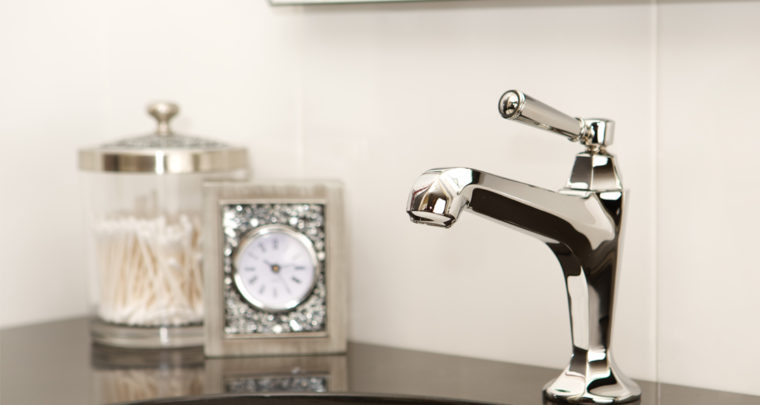
“You like me! You really like me!” A stunning sophisticate, Watermark’s Beverly faucet exudes Old Hollywood glamour from the most envied 90210 zip code. An alluring flared base and seductive spout evoke tinsel town timelessness, while handles in round, multi-faceted or solid crystal make this tap ready for its close up.

Paparazzi by Corbett Lighting

“No pictures, please!” As a celebrity skyrockets to super stardom, fans demand the latest gossip. And the flashbulbs come alive for Paparazzi by Corbett Lighting. A geometric and jeweled delight, this one-light wall sconce is made from hand-crafted iron and features topaz and clear crystal stones. With such dramatic and daring design, we’re shocked it hasn’t ended up on TMZ!

Read the rest of this entry »

Emerald City Style

December 7th, 2012

“Lively. Radiant. Lush… A color of elegance and beauty that enhances our sense of well-being, balance and harmony.” This week Pantone  chose Emerald as their 2013 Color of the Year. Sophisticated and luxurious, emerald is associated with prosperity and renewal. And it’s no surprise. Whether a glittering gemstone or a fresh sapling, the color green is a natural beauty.  Are you looking to go green in your own home? Get your chloro-fill with these green-inspired design tips.

Once considered an accent color, green is now taking over as a mainstage design staple. Available in an endless array of shades and tones, green is versatile and can be dressed up or dressed down depending on the mood. Combine a bright shade of green with other vibrant hues to add excitement and energy to your décor.

Hutton Wilkinson – Harper’s Bazaar

Or tone it down with some soft neutrals to create a more sophisticated ambiance.

Billy Roberts – Atlanta Homes and Lifestyles

In general, blue-greens and grass-greens (colors associated with nature) are more calming, while yellow-greens like chartreuse and lime are better for a brighter space. The options are endless, but it’s important to make sure your tones don’t clash. Don’t mix the two together!

When it comes to lighting your room, going green isn’t just about the color— it’s about sustainability. Why settle for anything less than energy efficient? Creative System Lighting offers the Green GOOD DESIGN Award winning Eco-Downlight LED Mini, a smaller version of their popular Eco-Downlight. This Energy Star compliant fixture is admired for its enormous energy and maintenance savings, using just 14, rather than 50, Watts.

Do you have your own green design tips? Let us know in the comments section below!

Sources:

http://www.houseofturquoise.com/2012/12/2013-pantone-color-of-year-emerald.html

http://www.sheknows.com/home-and-gardening/articles/952393/decorating-with-the-color-green

Minimal to the Max!

October 30th, 2012

If simplicity is the ultimate form of sophistication, then it’s no wonder why minimalism has endured in home decor. While overdone interiors decked like the halls of Versailles fail to stay in vogue, minimalist design is timeless. But who says simplicity has to come at the cost of luxury? As evidenced by the French designer Jean-Michel Frank, with great design, minimalism can be just as decadent.

In 1920’s Paris, Art Deco reigned supreme. Lavish and ornamental, this decorative style reflected the decade of prosperity following WWI. While showy and flashy was all the rage, Jean-Michel Frank was making a name for himself with his minimal, avant-garde approach to design. Still reeling from the tragic loss of his family as a result of the war, he ushered in a style that reflected the austerity of the previous generation. By stripping furniture down to the bare minimum, he created spaces devoid of ornamentation and clutter—along with a new approach to understated elegance.

Read the rest of this entry »

Stone Forest Road Trip!

July 25th, 2012

With summer in full swing, there’s no better time than now to take a road trip.  So buckle up, because Stone Forest is taking us on a virtual road trip to some of their favorite destinations nationwide. Better yet, they’re stopping at places full of natural beauty- just like Stone Forest designs!

The Grand Canyon is one of the Seven Natural Wonders of the World and a must-see for any Arizona traveler. We see its natural color and pattern variations mirrored in the stunning Old World bathtub.

The Redwood tress of California have a commanding presence, rich colors and striking natural variations. The thick slabs of sustainable hardwood that Stone Forest uses to make the Wood L-Slab Pedestals boast similar deep red colors and a never ending supply of organic patterns.

Read the rest of this entry »

THG SO.

July 17th, 2012

With summer now in full-on “heat” mode, any sign of coolness brings a needed respite if not a sigh of relief. Think: sliced juicy watermelon, iced tea with fresh mint leaves, frosted popsicles, visions of waterfalls and icebergs.

A product suggestive of “cool” in every inch of its being: French luxury faucet brand THG’s SO. bath series. Made from clear optical glass, the words “Chaud” and “Froid” etched inside appear to literally float on air. Balanced on top of a deck of sleek polished chrome, SO.’s icy cube handles provide a welcome contrast that can complete any interior style.

It’s no wonder, as SO.‘s designer Olivier Gossart’s, recent project, the ultra-chic and modern French Alp ski resort, Le K2, has received raves for its equally resplendent interiors. Perhaps as they say, necessity does beget ingenuity. But, in our case, we’ll take it, as SO. will make any bathroom cool, regardless of the temperature.

Ready to Dive into the Olympics?

July 16th, 2012

In preparation for the 2012 Summer Olympics, major new facilities and buildings and are being constructed throughout London, preparing for the onslaught of tens of thousands of spectators and dozens of high profile athletic events. One such project which has been garnering strong reaction from architecture observers and critics is the London Aquatics Centre which will host Olympic swimming, diving, and synchronized swimming events with a seating capacity of 17,500.

The complex sits in the expansive Olympic Park development on the banks of the River Lea canal, a major source of inspiration for the designers. The three-pool complex was designed by the award-winning and somewhat controversial architect Zaha Hadid through her firm Zaha Hadid Architects who describe their process as “inspired by the fluid geometry of water in motion.”

Zaha Hadid has been recognized internationally for her academic work and aptitude for emerging technologies in architecture and design. The Iraqi-British architect won the Pritzker Prize in 2004 and was included by Time Magazine as one of their top 100 Most Influential People in the World list in 2010.

Zaha Hadid

A massive engineering feat, the 3,000 ton roof structure was lifted and placed onto supports in a single motion and rests at three points.

As with everything Zaha designs – strong reactions are common. Architecture critic Rowan Moore explains to the Observer his disappointment with the “blown-up, go-faster” temporary structures that he feels obscure the form of the main building. The temporary structures are intended to seat an additional 15,000 visitors for the Olympics before being dismantled and used again for the 2016 Olympics in Rio de Janiero. The result of the temporary structures is two wedge-shaped protrusions from the main structure’s rounded shape where glass walls will eventually take place.

Moore does go on, however, to credit the architects on the scale and form of the interior which he describes as “like a body more than something constructed out of pieces.”

The concrete diving platforms of the center are built into the structure as complimentary to the greater structure, and work as architectural punctuations of the space.

The wave of the roof sweeps up from the ground and inside results in a ceiling that sinks in the center to subtly separate the diving and swimming event areas.

The ceiling above the pools is thatched with concrete beams and lighting pockets that recall the Brutalism and Post-Modernism of the Nixon Era with a simple and decidedly contemporary twist.

The development of London’s Olympic Park has been touted by politicians and planners as an engine for revitalization of the Stratford area of East London. The Boston Globe reports that roughly $10 billion of the Olympic budget was allotted to development in one of the most disadvantaged areas of Britain. Connected by massive pedestrian bridge, the Aquatics Centre will be accessible from the under-construction Stratford International high speed rail station and other transit services through the huge Westfield Stratford City shopping center currently undergoing a massive renovation and expansion. As such, there is huge pressure on planners and architects to design space that will work not just for the duration of the Olympics, but that will continue to be relevant and integrated with the local community well into the future.

After the games, the temporary seating structures will be removed and the new park space will be christened the Queen Elizabeth Olympic Park to mark the monarch’s Diamond Jubilee. Further greening of the area will continue as planners adapt the massive space to its role as a neighborhood and regional center.

Life Edited

July 3rd, 2012

In 2009, TreeHugger.com-founder Graham Hill initiated a competition to come up with a design for his 450 square foot New York City studio that would maximize space while emphasizing good design and environmental responsibility.

Over three hundred entries from around the world were sent in, and from those Hill selected an entry from architecture students Catalin Sandu and Adrian Iancu called One Size Fits All. The Romanian students were able to satisfy all of Hill’s ambitious requirements, including dinner seating for at least ten, guest accommodations, a home office, and plenty of storage. The name Life Edited was given to the retrofit project and this apartment has since been called LE1.

Sandu and Iancu designed the apartment by first delineating between the convertible areas — living space with multiple uses — and non-convertible areas such as the kitchen and bath. These areas were pushed to the rear of the apartment to leave as large an open space as possible for the living area.

A moveable wall was built into the side of the apartment which can be pulled out to separate the space into two rooms, an office/guest room combo and a living/bed room combo. When the wall is not pulled out, the large space can easily fit a dining room table which can be expanded to seat up to twelve people. The guest space comes in the form of two Lollisoft bunk beds which flip down from the wall as does a desk for the office area.

The living area contains an Atoll 202 sofa/bed designed by Giulio Manzoni and Pierlugi Colombo for Clei which can be switched between L-sofa and queen size bed in a few seconds. With the wall hidden, the room comfortably seats up to eight in the lounge area and twelve for dining, no easy feat for an apartment the size of a standard two-car garage.

The kitchen contains a full set of appliances and a peninsula suitable for informal dining, unlike kitchenettes of yesteryear’s Manhattan apartments. The large kitchen sink is equipped with a water-saving fluid F821 pull-down faucet and sits alongside an induction cook top which sits beneath a built-in hood and additional storage space.

Sparing no square foot, the designers intended to make the bathroom as versatile as the living area. The walk-in shower is designed with the ability to convert to a sauna, another luxury not typical of studio apartments. The shower/sauna is built as a room within a room, allowing simultaneous use of both the washroom area and shower. Reflective of Hill’s commitment to sustainability, the stylish and wall-mounted Cube toilet by Caroma is highly efficient, using just 0.8 to 1.28 gallons per flush. Alongside the Cube is a washbasin fitted with a fluid Wisdom faucet which has a flow rate of just 1.5 gallons per minute, more than a third less than typical faucets. The bathroom’s door is frosted glass, which provides both light and privacy.

Hill was so pleased with the success of his apartment that he went on to purchase a second, even smaller, studio in the same building called LE2. Using the LE1 as a template for this and other projects, this apartment is planned to accommodate up to four overnight and eight dining guests.

Life Edited is quickly evolving as a retrofit design company that seeks to use creative, often technology-driven ideas to find better use for less space. Hill intends to work with developers to “edit” buildings to accommodate additional, or improved, units. The hope is that innovative design will facilitate greater cohabitation and sharing, making our world a little greener with each small, yet perfectly appointed project.

Join our newsletter!

Email
Name


Newsletter Submit Your Design
LargerThanLight

Interior Design Blogs /><a href= Interior Design Blogs - Blog Catalog Blog Directory Home & Garden Blogs Architecture Blog Directory Blog Directory by Blog Flux Top Blogs